Ungdomshuset and Indoor Concert Photography
Doing indoor photography, especially at a concert, is a tricky thing. But first, let's talk about Ungdomshuset.
If you weren't aware, Ungdomshuset (directly translated, The Youth House) is a place in Copenhagen for rebels, punks and anti-facists. It's an amazing place to go and they have cultural events often that brings in all sorts which truly celebrates diversity of people. Most often they host anti-capitalist concerts starring underground and up and coming bands. If you are into metal, death metal, grindcore, black metal, and really just all things metal, you'd probably love to be here and even if you aren't into that, bring some ear plugs and join in anyway! There are so many cool and amazing people here and the events are very cheap. (Cash only though!)
If you want to skip the history lesson press here
History
Ungdomshuset has a bit of a history. In 1897 a house was built on Jagtvej 69 in Copenhagen. The place became known as "Arbejdernes Forsamlingsbygning" and while that is a long time ago, we are more interested in what happened later. By 1982 it became the place for people of all sorts who disagreed with and opposed established society. The place was often the home of underground concerts and gatherings, mostly consisting of younger people. The house itself was marked as a protected building by the ministry of cultural inheritance, meaning it couldn't be torn down or built out, simply preserved and this was likely a big factor in why the building stayed for as long as it did. By 2001 though this status was revoked. The house was sold in 2000 by the Copenhagen Municipality to a company called HUMAN A/S and that company was bought up by Faderhuset. Faderhuset was an evangelical church on Lolland which was controlled by a leadership of six people, including two of the founders who reportedly have had upto 40 people in their congregation, and this was a bit of a controversial move at the time.
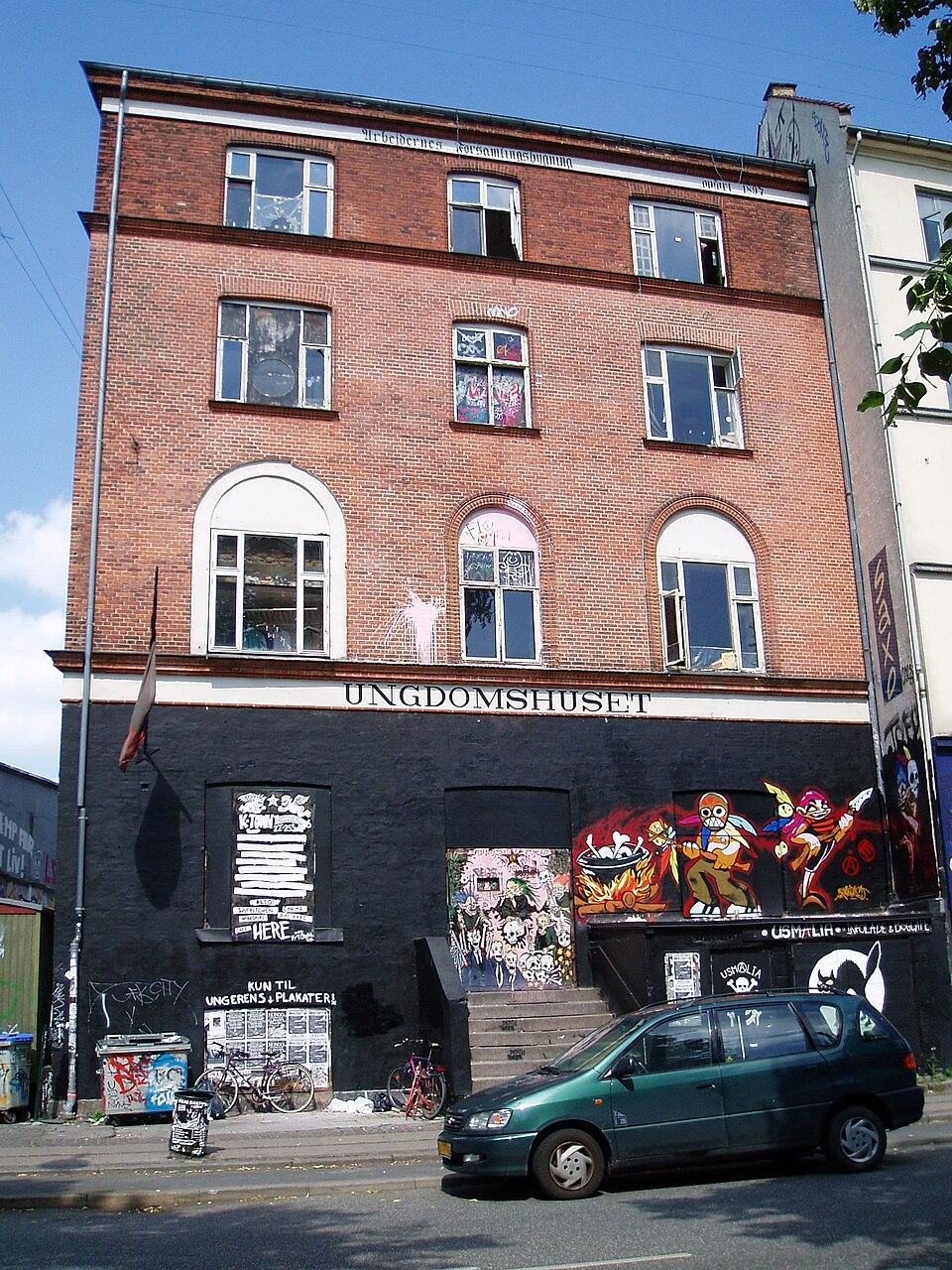
At first, it was decided by the Copenhagen Municipality that if no serious buyer appeared to buy Jagtvej 69 within half a year of the building becoming unprotected, then Ungdomshuset could continue operating as they previously had. One company decided to put up a bid for 2 million kr and similarly did Fatherhuset. The Copenhagen Municipality did not consider the bids serious and so they waited. Right as the 6 months was about to run out the previously unknown stock company HUMAN A/S gave a similar bid that the municipality decided to take. They added a condition in the sale that HUMAN A/S couldn't sell the property to others, before Copenhagen Municipality was given a chance at buying the property back first. This however did not prevent HUMAN A/S to have new owners, which is exactly what happened when Faderhuset suddenly got into possession of all stocks of HUMAN A/S including properties. This essentially made the condition before a potential sale null and void. When the news broke that Faderhuset had essentially bought the place people at Ungdomshuset understandably were less than thrilled, seeing as an evangelical church and a house full of young non-conformists couldn't be more opposite if they tried. Faderhuset ensured the Copenhagen Municipality that they would transform the house into a place of worship of Christ for young adults. In 2001 Faderhuset were granted all stocks from HUMAN A/S and property, including Jagtvej 69.
Ungdomshuset tried to get the building back from Faderhuset by starting a fund. The fund managed to amass enough money to make a serious bid on the property and offered Faderhuset 5 million kr. to sell the property back to the youth. However Faderhuset would not sell out of principle. They claimed that selling the building to Ungdomshuset would mean they had given in to threats of "fire and fury in the streets of Copenhagen" and that it would legitimise the violence and threats that they had allegedly experienced after the purchase.
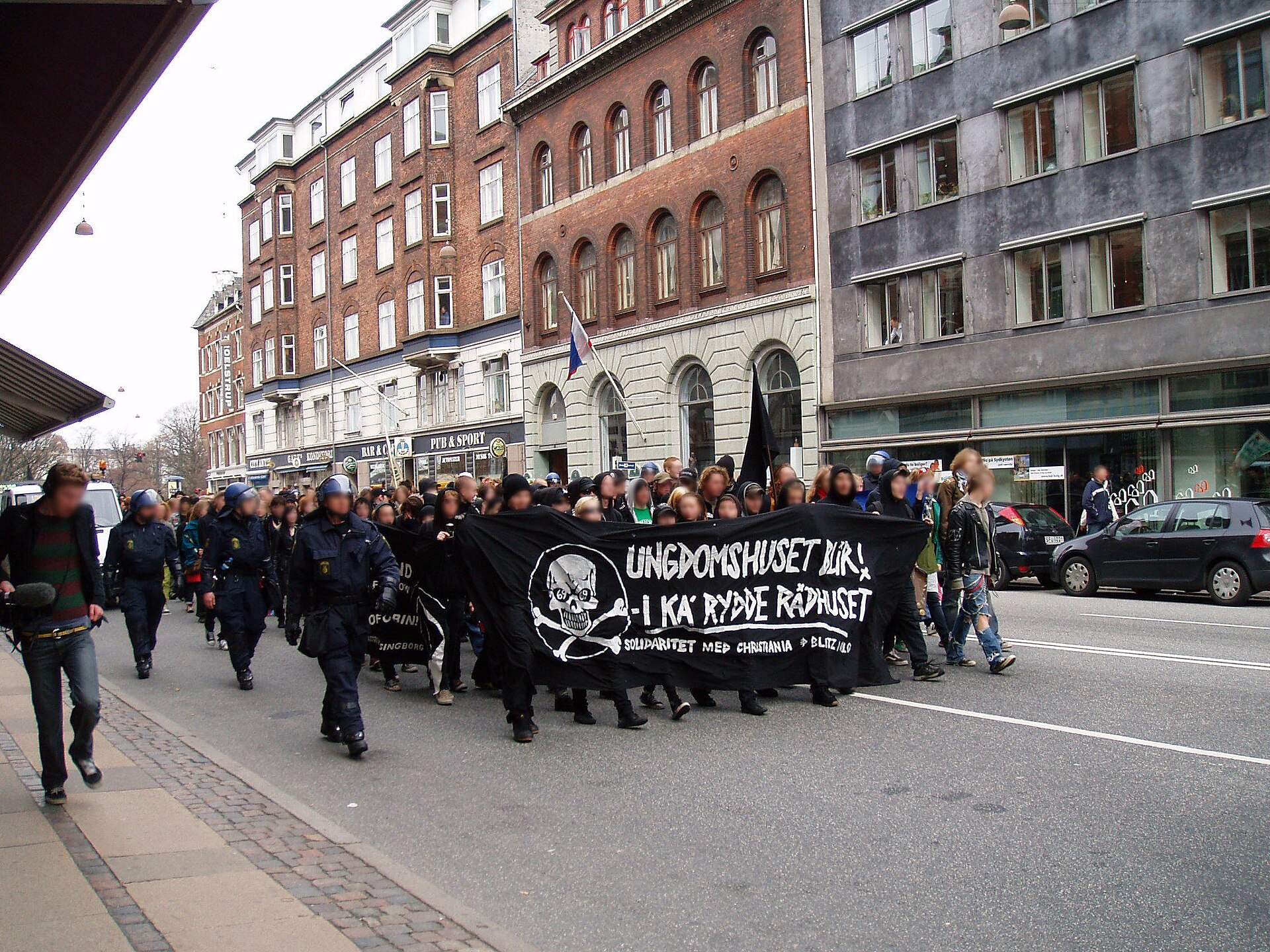
Shortly after Faderhuset got a hold of the property they immediately tried to make the selfgoverning anarchist culture house vacate the premises, pointing to a user agreement from 1997 between the Copenhagen Municipality and Ungdomshuset. When this failed they instead went with litigation. This process started in 2002 and it wasn't until 2006 that the courts sided with Faderhuset. Ungdomshuset was told to clear out by December 2006 but they refused. So on the 1st of March 2007 police cleared the building by force.
There were many protests peaceful and violent against the municipality of Copenhagen to prevent Faderhuset from getting and tearing down the building. After inspecting the state of the house Faderhuset decided to tear down the building. The teardown started on the 5th of March 2007 and ended on the 8th of March 2007 leaving a hole between two apartment buildings with a gravel patch.
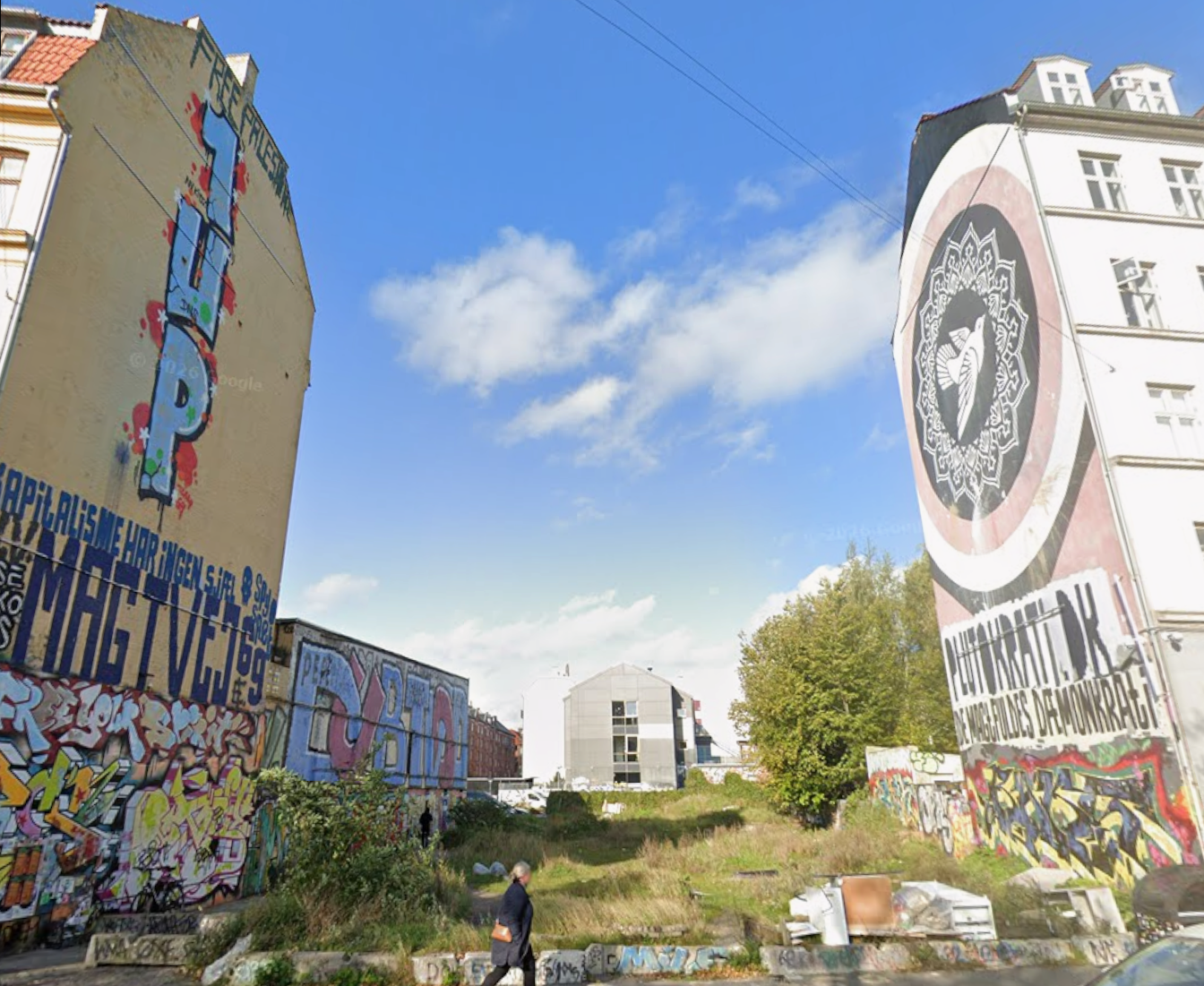
After Faderhuset experienced an economic downfall they sold the property to the investment fund named Ventureinstituttet. By 2008 it came out in the media that Faderhuset allegedly had used violence against the children of their church after an extensive investigation police could not find anything to prove such allegations. The evangelical church of Faderhuset dissolved by 2013, likely due to financial issues. Jagtvej 69 is often called or known as "Ground 69" by people who frequent Ungdomshuset today. Despite several offers, even including one anonymous property investor offering 15 million for the property, the property has still not been sold to this day. The sale of the property to Faderhuset is estimated to have cost the Copenhagen Municipality around 72 million kr. in resources.
There is a lot more history to go over in the years upto and after 2007 but it'll be too much for me to cover here.
G-13 & BZ Movement
In October of 2007 several thousand people decided to protest the teardown of Ungdomshuset by finding a new place to call home. The protestors decided on a location at Grøndalsvænge Allé 13 in Copenhagen. The plan was to peacefully and non-violently invade the place and declare it the new Ungdomshus. What was unusual about this is that the protest was telegraphed well in advance out in the open. On the day that protestors showed up, which is estimated to be around 6-7000 people (although police say around 3000 people), police used tear gas, dogs and beatings to keep protestors at bay but despite their efforts several hundreds still made it into the building.
Because of G-13, as well as the teardown of Ground 69, the protests and other actions that people from Ungdomshuset had done, politicians in the Copenhagen Municipality were starting to get desperate as their police budgets had been far overspent due to police overtime and as such they were discussing simply finding a location for these people instead. While a new place wasn't found through the actions of politicians, another building was found instead by the people of Ungdomshuset at Dortheavej 61 which was similarly invaded and overtaken. The owners of the property at first asked that they leave peacefully and that no police needed to be involved however after they refused to leave the house was eventually granted to the youths to use for cultural events.
Quite a few people who were part of G-13 were also connected to what's called the "BZ Movement". The BZ movement started around the 1970s and was a counter-movement to established society and especially in housing. It largely consisted of loosely connected people who shared a common ideology. From the 1970s to the 1980s the BZ movement became especially active and helped people in search of a home by pointing them to unoccupied/uninhabited buildings and giving people a crowbar. Ungdomshuset likely started this way and so did a couple of other culture houses in Denmark, such as Christianshavns Beboerhus. The BZ movement is an important cultural force that has shaped much of Denmark's approach to "societies within societies" and non-conformist communities.
While the BZ movement and the founders of Christiania shares a lot of common ideology, the two are strategically distinct in their approaches.
Today
Today the current Ungdomshus (may it last forever!) is located on Dortheavej 61, 2400 København right next to the library on the premises which often hosts other events like anarchist book sales, goth markets and similar types of events.
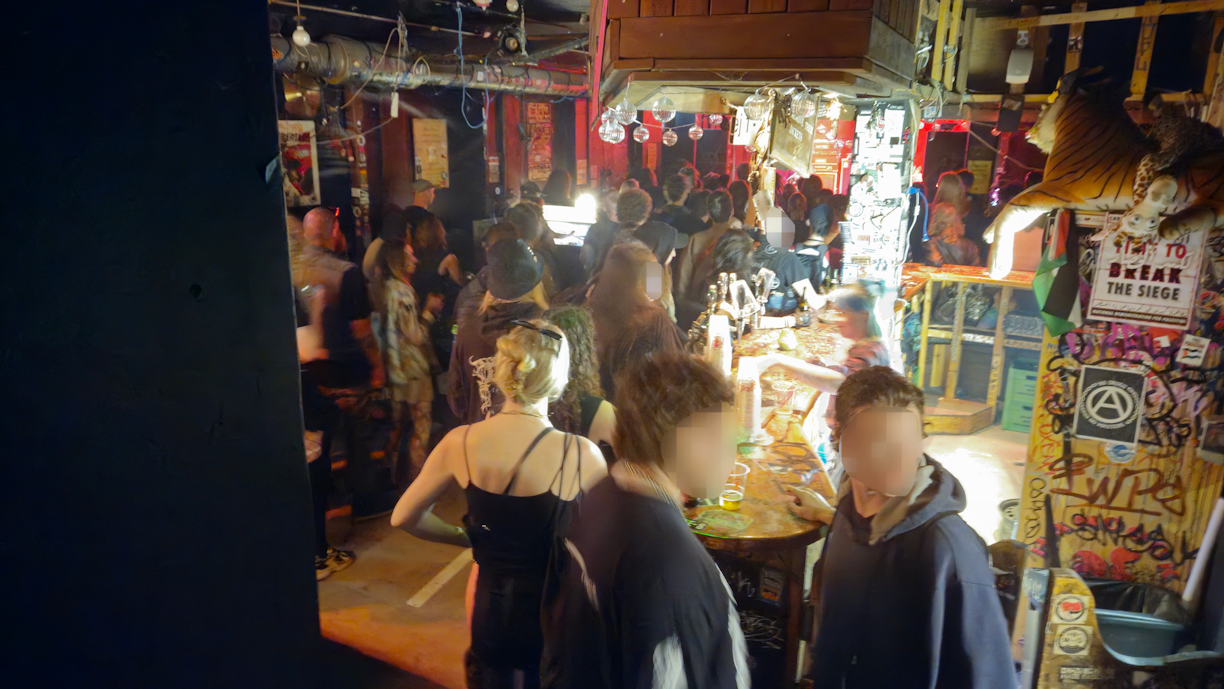
The atmosphere is amazing and the people are too! You can just feel how everyone is here to have a good time and there is room for so much self-expression and it just fits in. While I'm no professional photographer, I've liked to shoot pictures for a while. I've mostly used my phone but it's just not the same as having a real camera where you can hear the clicks and dial all the settings in just right. To give an example of what I've managed to do with a phone, see below:
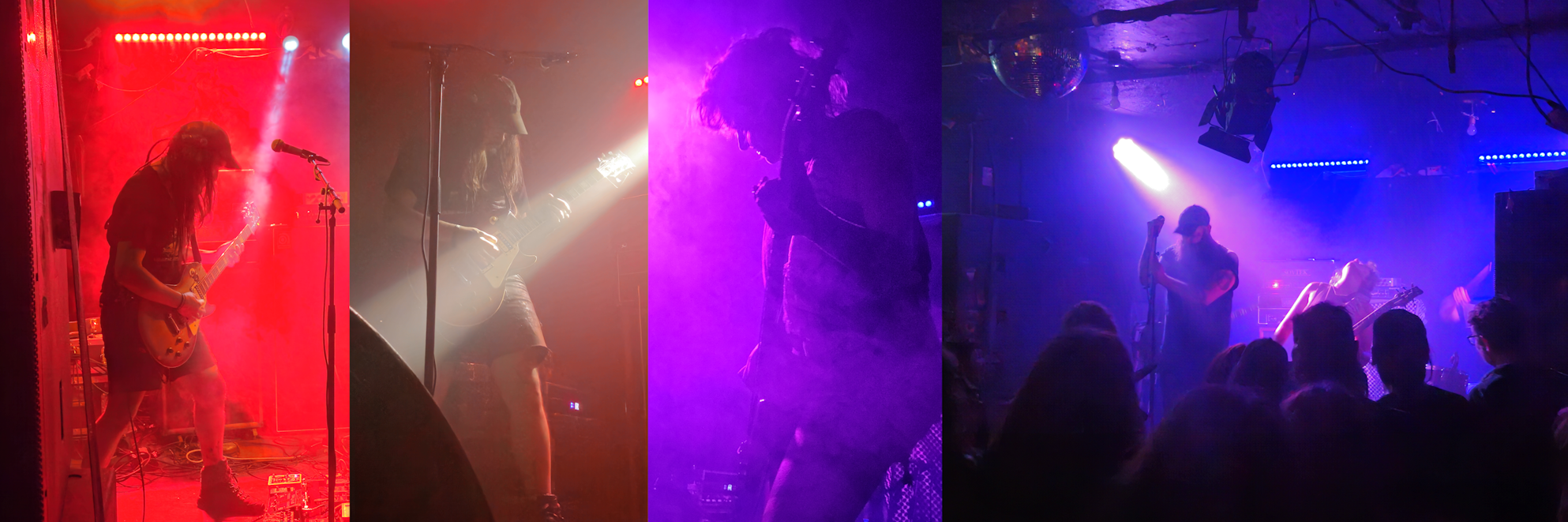
They are not bad pictures, but they aren't really as good as they could be, in my opinion, because I'm fighting multiple factors here. Sure, some of the pictures will work just fine on a phone screen even because I use the light and smoke effects to hide the imperfections of all the noise that low light photography introduces, but if you needed to use those pictures for larger image mediums like computers or tablets? It wouldn't look all that great. Some of it has to do with the low light, some of it has to do with the tiny lens (something like a 5mm lens??), and the rest is fighting the software itself. See Apple realised long ago that software would beat hardware on phones when it came to photography and they were right. Once they figured that out everyone else eventually did too and tried to play catch-up ever since. But the problem just is that, even software has its limits. You can't make up detail that simply isn't there.
Concert Photography
Now we get into the meat and potatoes of it all. How do you best do concert photography? Well you need a couple of things to get the best result:
- Large Image Sensor - The larger the image sensor the more information you have to work with in post. A full frame camera is the best (35mm sensor). DSLR or Mirror less cameras will do fine.
- A Wide Aperture - On cameras this is called the "F-value". For the best results you want to have as wide of an aperture lens as you possibly can. One that's capable of f1.4 is ideal, however anything in the range 1.4 to 2.8 should do. If you are doing day concerts with lots of light you can get away with narrower apertures, around 3.5-4.8 although it's not ideal.
- Fast Shutter - Seeing as performers move around a lot you want a fast shutter speed to get clear pictures. A sweet spot is around 1/200 - 1/250.
- Auto Focus - Auto focus (or AF) is a godsend for concert photography. Being able to automatically track your subject as they move around a lot is basically a must unless you are dealing with very stationary performers. On top of that you don't just want AF you want Continuos Auto Focus. When you combine this with Continuos Shooting you have a real winner as the AF is applied between every shot, instead of once before every shot in a sequence.
- High ISO Values - Your camera must be capable of high ISO values. This value controls how sensitive the imaging sensor is to light. When you shoot in low light environments, such as indoor concerts, you want high ISO values. Usually between 3200 and 6400 although some times you may have to go as high as 12600 or whatever your camera is capable of. Although be careful. Too low an ISO value and you get dark pictures that are hard to make out, use too high an ISO value and you get pictures that are way too over exposed.
- Shoot in RAW - You want to have as much information to work with as humanly possible in post. Cameras that can shoot RAW format are best for this task.
- Fast SD Card - You want to have the right SD card. It should be at least UHS-1 with 90 mbit/second write speeds as Continuous Shooting of RAW pictures can hammer the card quite hard. Just as an example, for the concert I went to, I shot 1185 pictures on an SD card that had room for around 1260. That works out to about 300-400 pictures per band. Out of those, 161 were usable. Let that sink in. Only around 13.5% of the pictures shot were actually usable. When you shoot Continuously it's all about volume. Chances are some of the pictures will be great out of the bunch.
- No Flash - Some people will swear by having a flash. For some types of low light photography it might be nice, but for concerts? Big no no. It can completely wash out any picture you shoot and make it appear very overexposed.
I am using the Sony A7III camera which is a full frame camera that both supports Continuous Shooting of high quality pictures and Continuous Auto Focus. The pictures I shot on the 21st of August 2026 at Ungdomshuset was done so with a 55mm prime lens that could go as wide as f1,8. A prime lens just means it only has that one setting (55mm). You can get lenses that do, for example, 24-70mm and those are not prime lenses. However since this is a prime lens it also means that I have to move in order to get the best shots. I can't adjust the lens to do it. This introduces further challenges as I have to deal with equipment on stage, performers doing their thing and the crowd wanting to go crazy. It's always on me not to be in the way of everyone else and do my best to still get the best shots I can.
Although talking a bit with the performers before they go on about taking pictures can some times make them a little better at placing themselves such that taking pictures is easier!
The four bands that were playing were: CorpoRot, Induktri, Rogue Trader and Heretgia. The pictures were taken with permission.
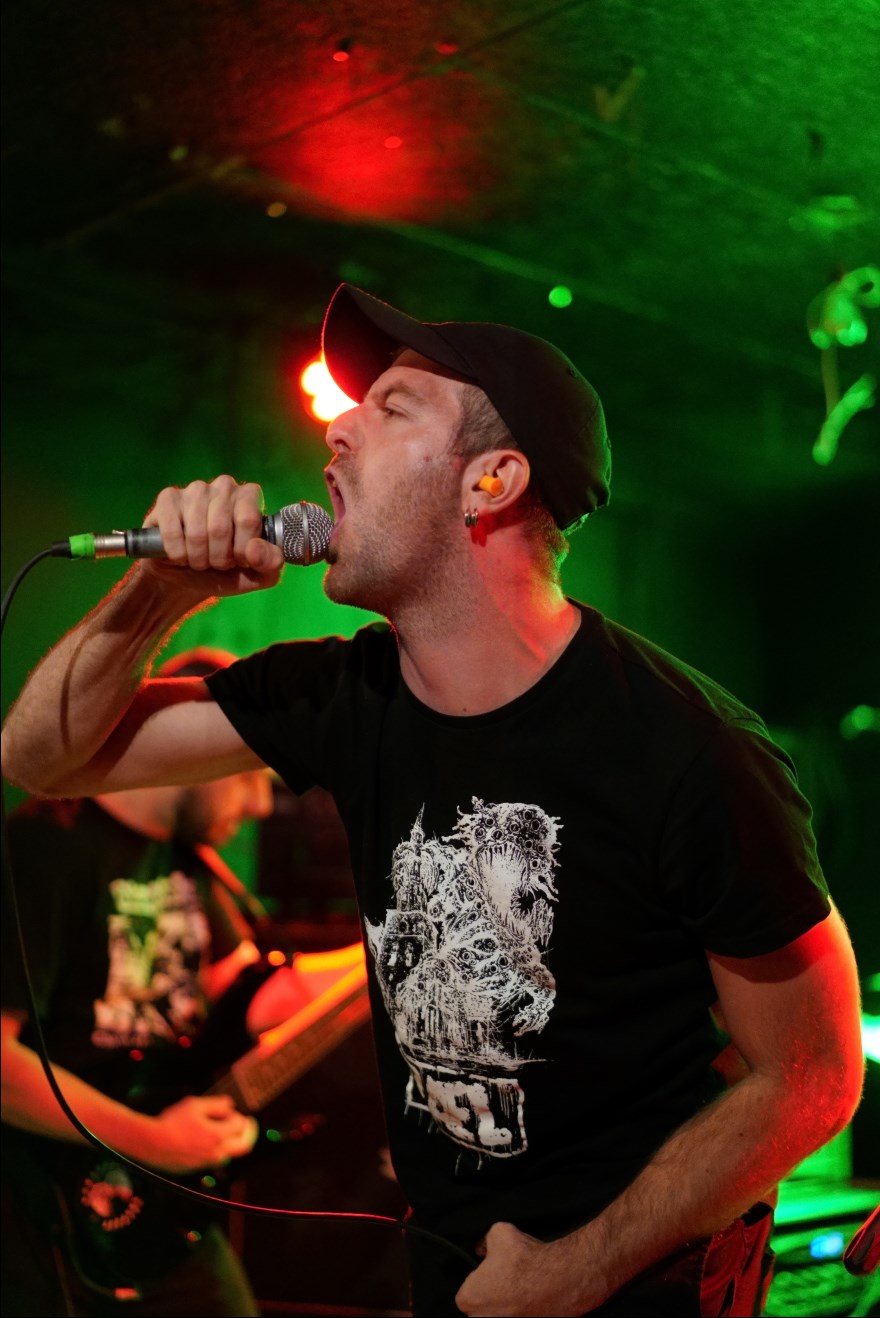
The first picture is of the lead singer of CorpoRot. The picture will look very clear and clean despite it being severely compressed. This is largely due to some lost information when saving the picture as JPEG but also because I can do some de-noising in post after the picture is taken. When you do low light photography you have to embrace the grain and noise that shows up on the picture because you can always make it look better in post. The alternative is to get a blurry or out of focus picture instead which is essentially useless. The settings for this picture were:
- Aperture: f1.8
- Shutter Speed: 1/250
- ISO: 6400
When you see this picture you might think to yourself "Wauw, the light was actually quite good in that place. Not exactly "low light" photography." But that's because the camera does all the work there to take in as much light as possible.
To give you an idea of how dark it actually is in the venue, here is the same picture but I've adjusted the brightness, contrast, highlights and shadows to better show what it looked like to be there in person. Something I can only do, because the information is there. It's a RAW image with a lot of data. Without that, you'd see much more artifacting in the picture.
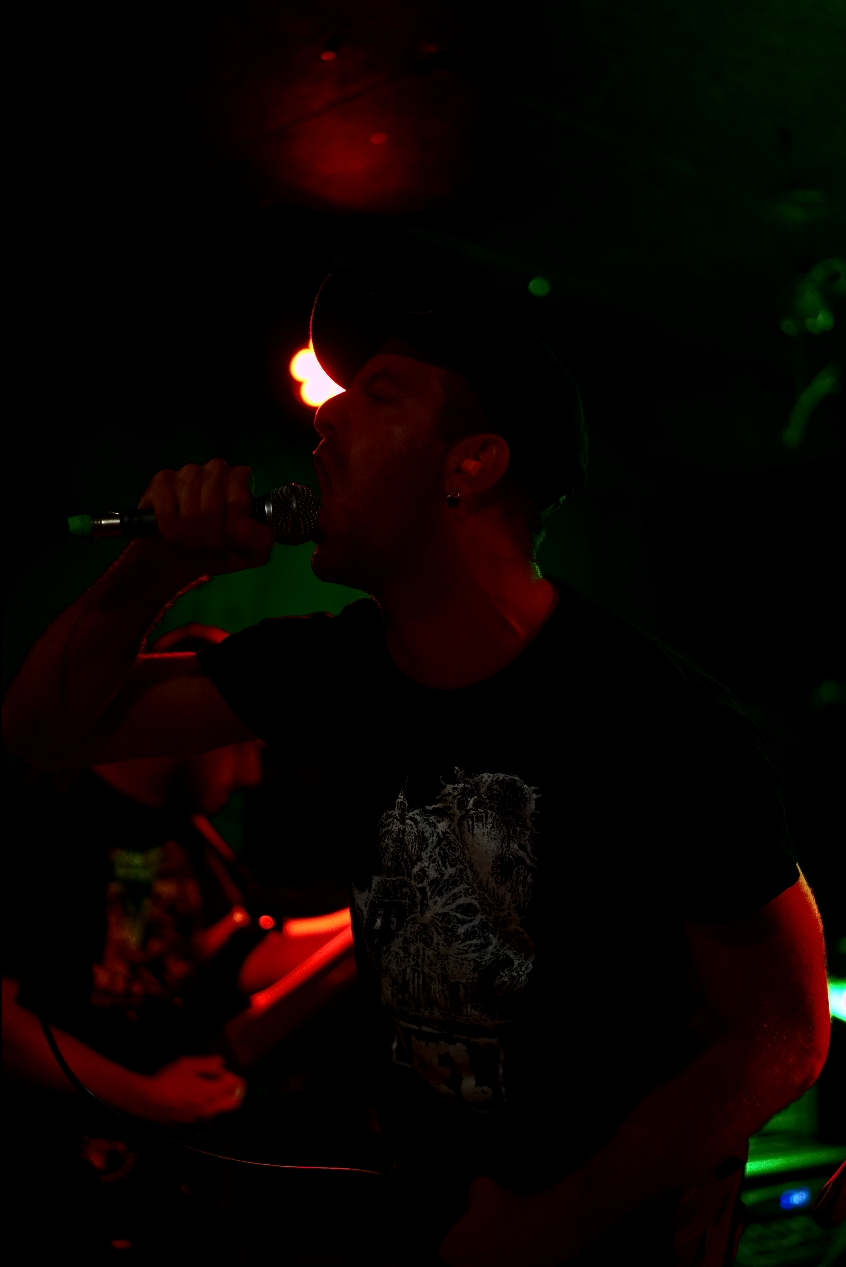
As you can see, a phone camera would struggle under these conditions because it simply would not be able to take in enough light fast enough to get a clear picture of the subject. It would be blurry and the facial recognition post processing would "enhance" the picture into a grey blob instead of a face. So how do you know what ISO and Aperture values you need to use as you take pictures in the dark? Well usually you leave the aperture as wide as possible, however you might have to adjust the ISO value as you go. Some cameras, mine included, has a nifty little "M.M" indicator on the LCD screen. MM stands for "Manual Mode" and it gives you a value between -2.0 and +2.0. It is purely instructional and does nothing to the actual picture.
What it attempts to tell you is, according to its own sensors, whether the picture will be underexposed (minus value) or overexposed (plus value). If MM is around 0.0 then you are more or less spot on for your picture. If you are negative, increase the ISO, if you are positive, decrease the ISO. It's not a hard rule here, but generally an easy quick way to tell if you are on the right track or not.
The settings for this picture were:
- Aperture: f1.8
- Shutter Speed: 1/250
- ISO: 10000
As you can see, despite this picture being about as lit up as you'd ever want in a low light setting, the ISO is so much higher than the picture of the CorpoRot singer because of the lower light environment.
Another close-up picture of a back-lit subject. The back-light really helps to put emphasis on the singer himself in the foreground and for this one particular shot, there were red backlights and white front lights, so the face was also lit up rather well. What you will notice however, if you really look at the pictures, are these "bands" across the pictures. This happens because it's an electronic shutter which unfortunately there is nothing you can really do to avoid other than having a camera with a mechanical shutter where you can turn on as many anti-flicker functions as possible. Essentially this comes down to technical limitations of using electric silent shutters right now. It will likely be worked out in future. Essentially you are working with a shutter that might have a speed of, say, 1/200, however your image sensor is working at around 1/30 or so. That means the sensor simply can't keep up, yet. Mechanical shutters currently don't have that problem, but they will likely also be completely gone in a couple of years time.
In the meantime you might be able to help the bands (across the picture) in post using Photoshop or something else.
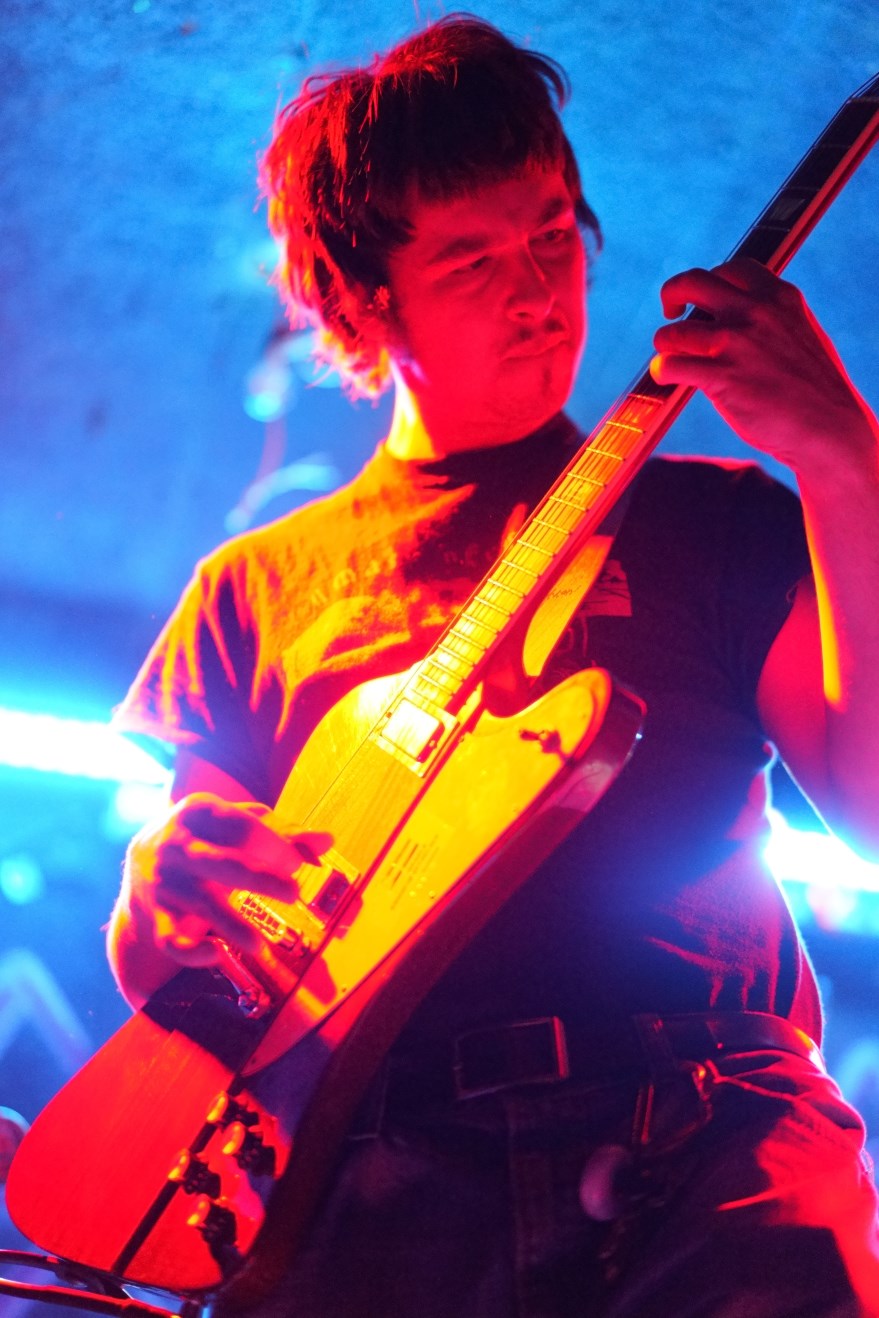
The settings for this picture were:
- Aperture: f1.8
- Shutter Speed: 1/250
- ISO: 10000
Now you might look at this picture and think "What? How is this seemingly so over-exposed with such strong highlights, compared to the previous picture?" and that's simply because of the amount of light that was looking right at the sensor at the time. I wanted to go for a more stylistic picture here and so I opted for a higher ISO value on purpose which would overexpose the image. But that's exactly what I wanted for the aesthetics. You have to remember to be creative with your tool and this is just one way of doing that!
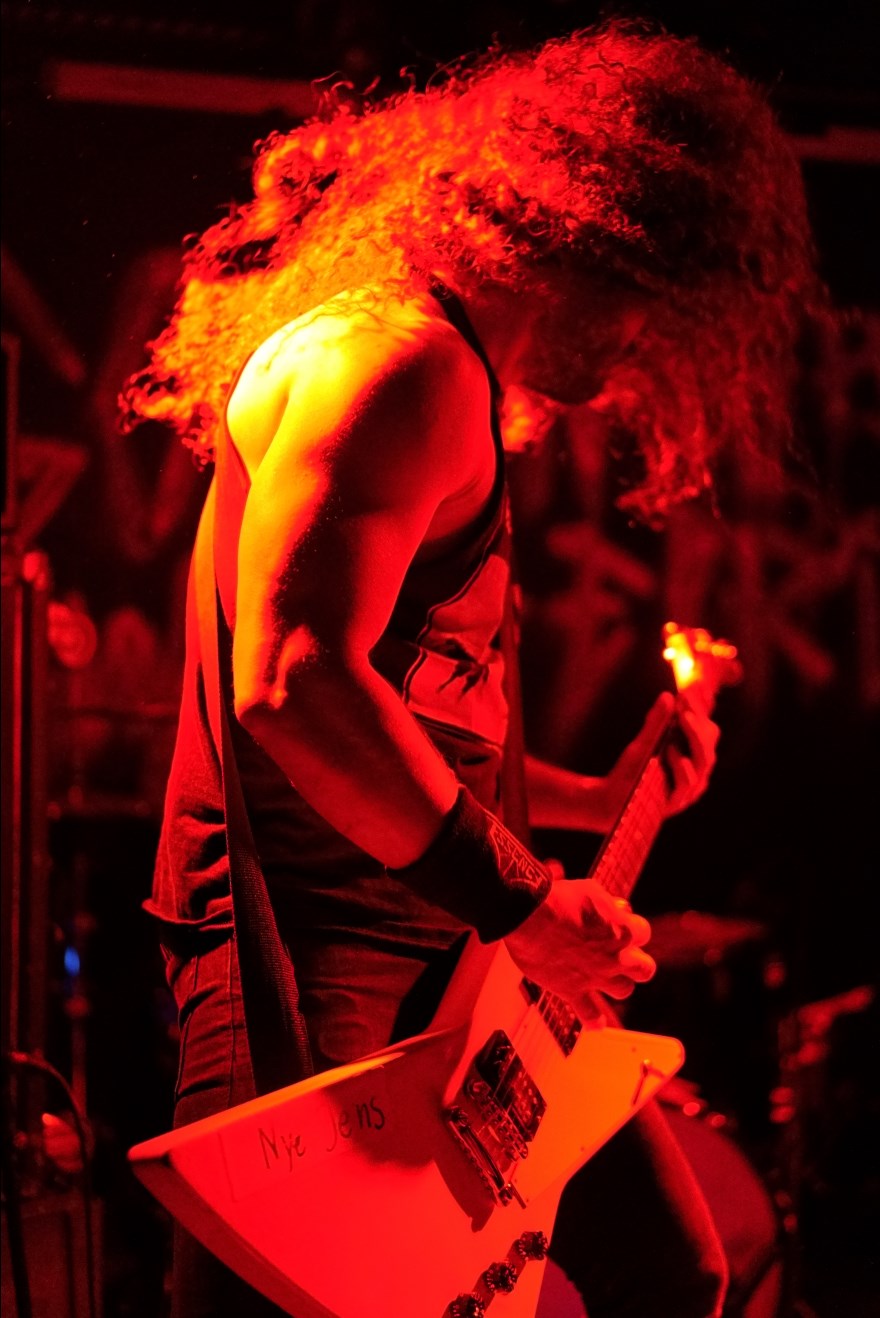
The settings for this picture were:
- Aperture: f2.2
- Shutter Speed: 1/250
- ISO: 10000
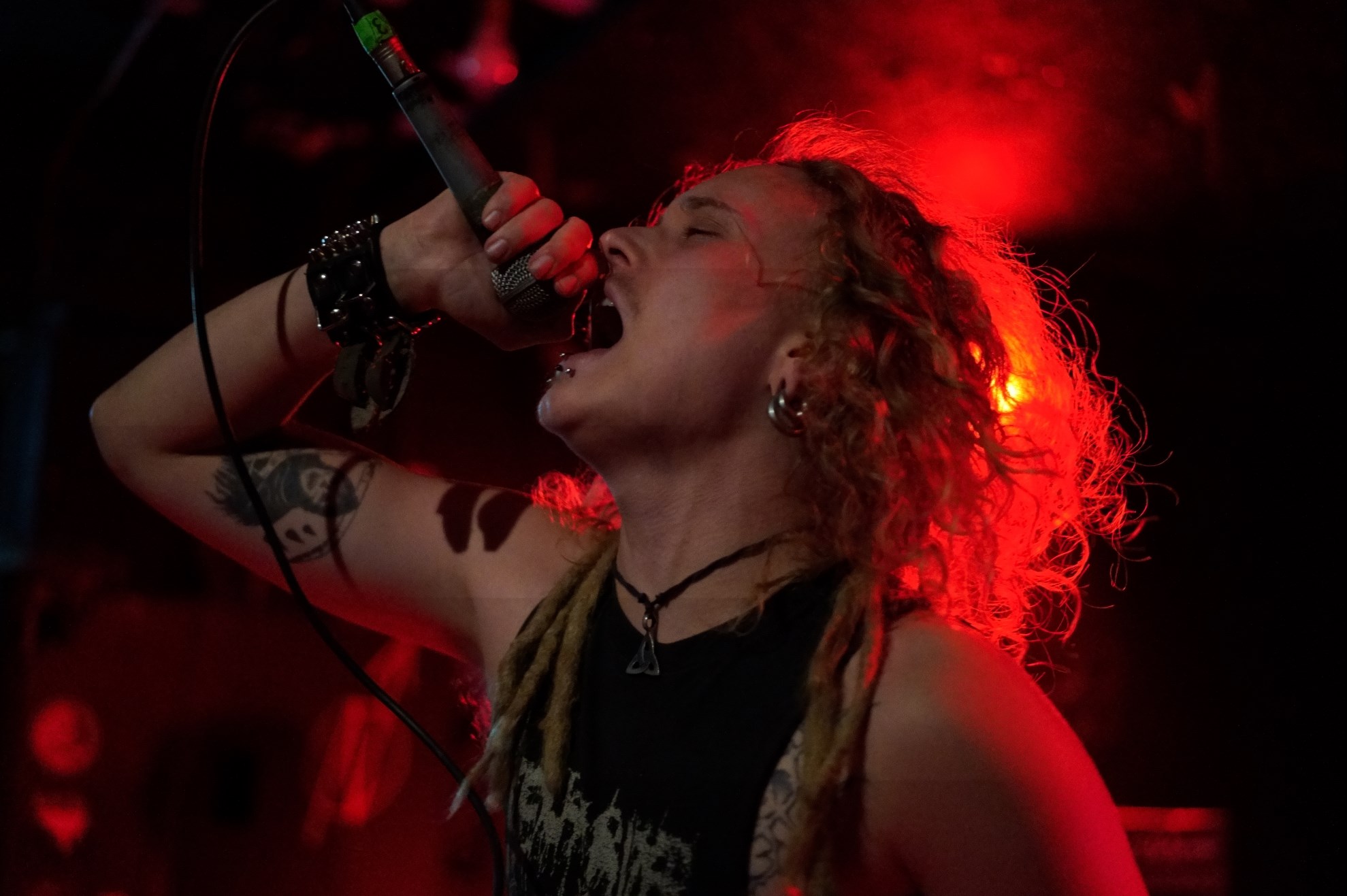
The aperture was narrowed a bit in this picture, just to get a bit more of the subject in frame. For this picture I want you to focus on his hair. When it comes to taking pictures of people with lots of hair that they either use to obscure their face or to headbang it's important that you try not to let the auto focus get caught on the hair itself. There are simply so many strands and your poor sensor cannot capture all of that detail in such a low light environment. Instead, choose a point below the hair that can focus your entire subject instead. The hair will look blurry no matter what, but in-between the continuous shooting you will get some hair pictures that are more clear than others.
I decided to manually set the focus on his right shoulder (basically pressing on a point with my finger tip on the LCD) and then as you point, you wait for the focus rectangle to tell you it's good (turns from grey to green). This allowed me to get his entire body in focus and most of his hair and he was quite stationary at this point. However lets move on to someone who was headbanging a lot:
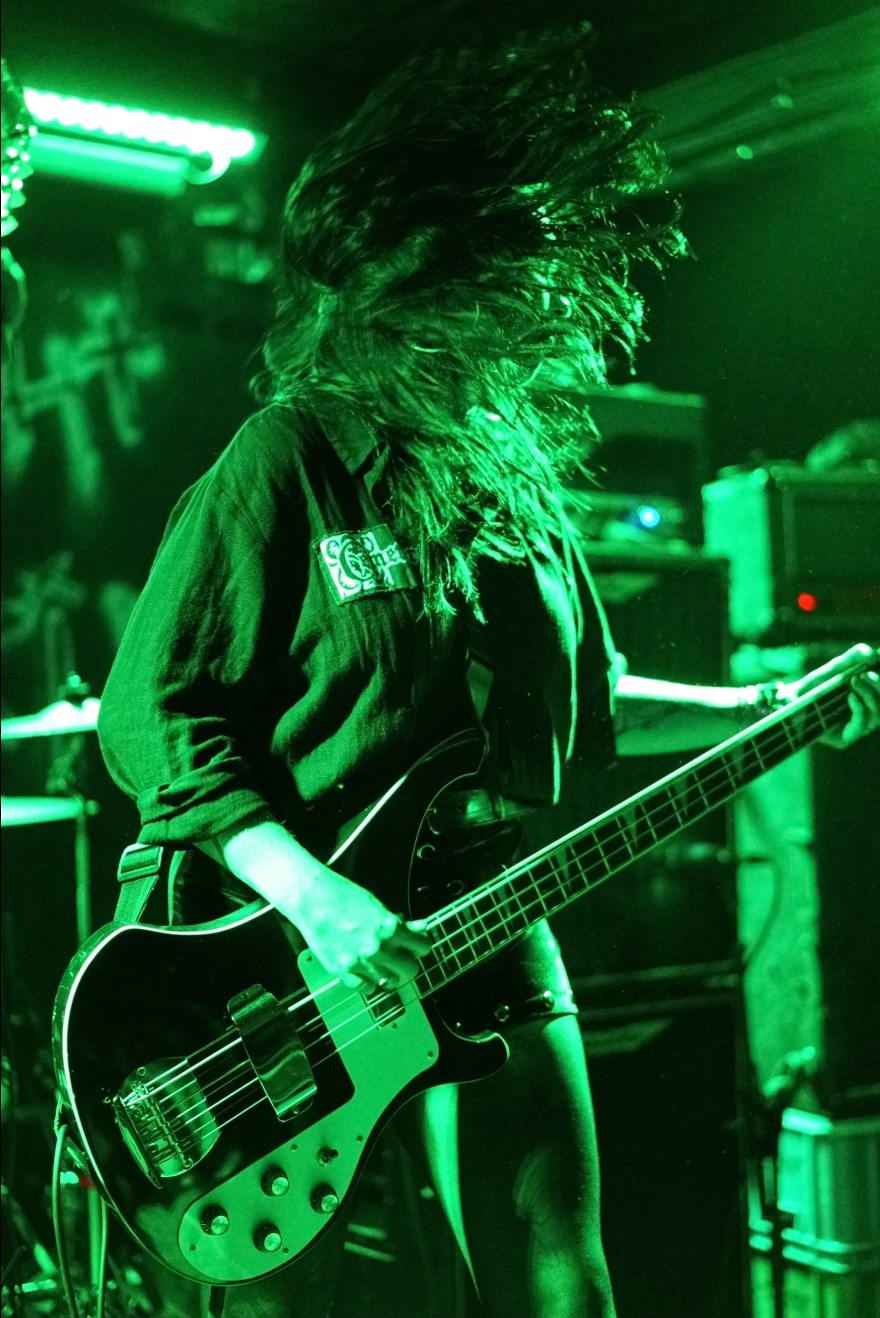
The image settings were about the same for this picture. Since I didn't have a single point to hold on to, as she was moving around a lot, I instead locked in to one position and started shooting, aiming for just below where her chin would be and only did very subtle movements to keep her in frame. Continuous Images, RAW and Continuous Auto Focus all three came in handy here. Out of the 30 or so pictures I took in series, which I could make the highest resolution gif out of ever, I found a couple of pictures where the subject wasn't just in focus, but the hair was actually very clear. It seems hard to do, but as long as you can keep the subject itself in focus, then the hair usually follows.
One last trick for low light photography. Black and White. You can shoot pictures either in black and white by setting up your camera for it, or you can make the pictures black and white in post. I prefer taking pictures in color and change them in post if I need to as then I have the option, rather than missing out on the option if my camera just did black and white out the gate.
Why would you do pictures in black and white though? Well, because it both stylistically can do a lot for a photo but also because black and white is incredibly good at hiding imperfections in low light pictures. Compare the picture on the left which is in colour and the same picture on the right which is in black and white:
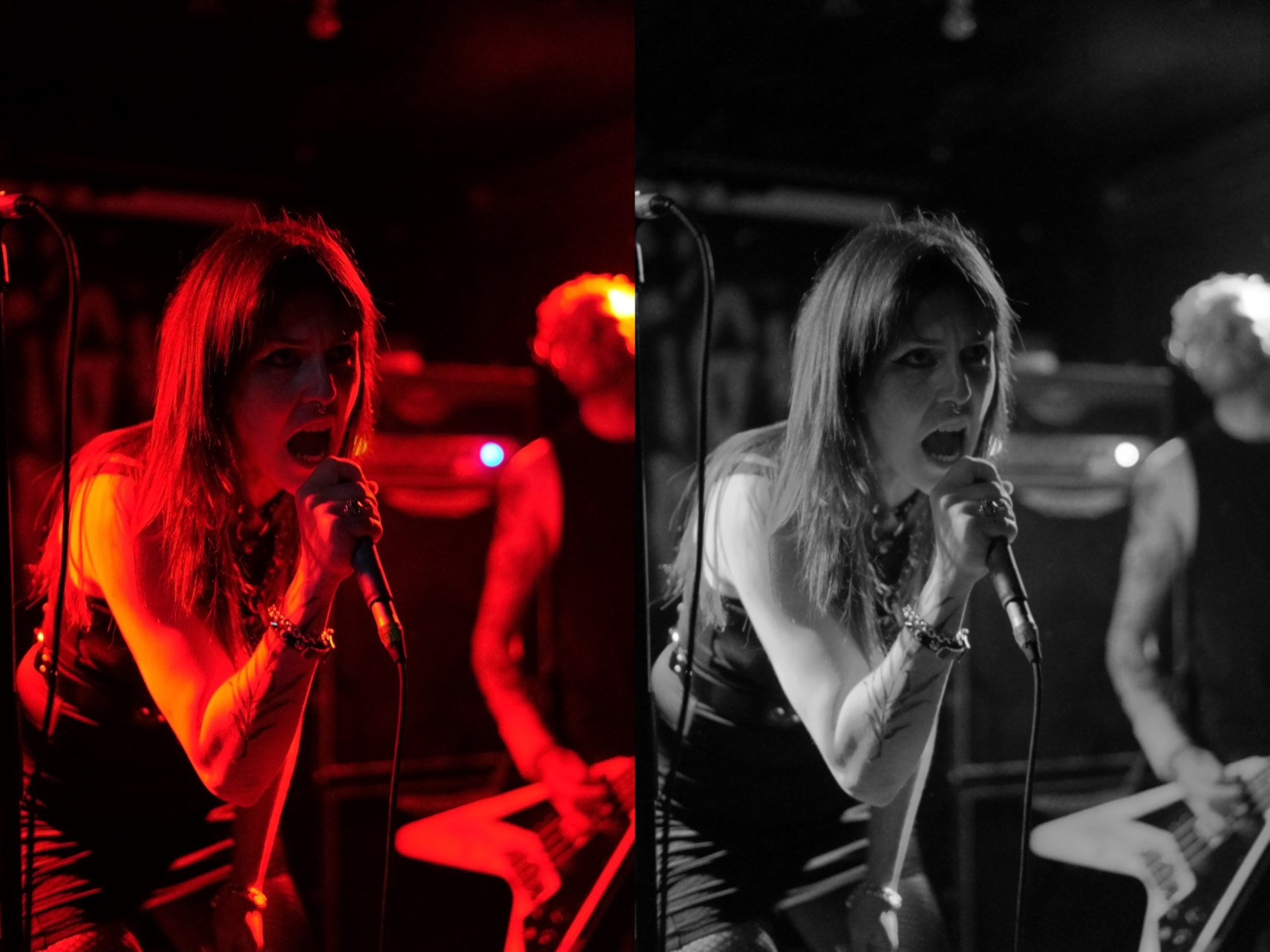
As you can see here, while the coloured picture has an intensity to it due to the red hues and somewhat shadowy face, it also has some very glaring highlights that are hard to miss on her right arm. It washes out her arm somewhat. In black and white though, that looks much more intentional now. On top of that it's also easier to make out the clothes she is wearing, and her face is now much more evenly lit, compared to being lit from the bottom which makes the top of the face more shadowy. Lastly her band mate in the background becomes a lot less noticeable making her much stronger in the foreground.
You will often see black and white photos from professional photographers as well who went to concerts and the images can some times be much more striking than if they were in colour. It's all about taste and what you were aiming for, aesthetically.
Conclusion
So while I'm no photography expert I hoped you learned a bit about shooting images today. It's not often that people find themselves in a situation where they have to shoot photos in low light environments, but even then the information can still be used to be more mindful of photography in other settings as the same settings are still available and needs to be considered there too.